
Quick Answer: Amelia Island’s top stops on Florida’s official birding trail are Fort Clinch State Park, Egans Creek Greenway, and Spoonbill Pond. Birds arrive in the greatest numbers between fall and spring.
Pack a swimsuit for Amelia Island, sure, but tuck a pair of binoculars in right next to it. Our island sits on the Great Florida Birding Trail, and good birding starts a short ride from our front porch.
Here’s where to go, what you’ll see, and what to pack. While you’re daydreaming, peek at our rooms and pick a home base for a birding weekend for two.
Where to Find the Best Birding on Amelia Island
Our piece of the Great Florida Birding Trail runs from Fort Clinch south to the Talbot Islands. Officially, it’s the Great Florida Birding and Wildlife Trail. The full trail links more than 500 sites across the state, and we’re lucky to have a good chunk of it close to home.
Fort Clinch State Park
Fort Clinch State Park is the trail’s northernmost gateway, and it sits right here on the island. Birders have recorded more than 250 species there, so bring your patience and your camera. The visitor center lends binoculars and stays open daily 9am – 4:30pm.
Head to the Egans Creek Overlook for marsh birds, or scan the water south of the jetty. The fort has plenty of history of its own, and our Fort Clinch State Park guide walks you through it.
Big Talbot and Little Talbot Islands
Spoonbill Pond sits about 30 minutes south of us on A1A, and local birders love it. Park at the Sawpit Creek boat ramp, then cross busy A1A with care to reach the pond. Once you’re there, a boardwalk with viewing stations runs right alongside the water.
Give yourself plenty of time, because winter mornings can turn up close to 50 species. Keep one eye on the tall dead tree across the pond, too. A bald eagle likes to perch there, keeping an eye on everyone else.
Getting There from Fairbanks House
Staying with us in the historic district pays off. Fort Clinch is about two miles away, an easy morning date on our Beach Cruiser bikes. Pedal in, pay a nominal fee per cyclist, and skip the parking hunt entirely. Egans Creek Greenway is just as close, with parking at the recreation center on Atlantic Avenue.
Spoonbill Pond is a drive, so grab one of our coolers on your way out. Ask us at breakfast, and we’ll gladly help you map out the whole route. That’s one of the perks of staying at a small independent inn: real local advice comes with your coffee. For more two-wheel ideas, browse our guide to Amelia Island bike trails.
Birds You’re Likely to Spot Along the Trail
You’ll mostly see wading birds, shorebirds, and raptors. Migration season adds even more variety.
Here’s a cheat sheet of the water birds of Florida you’ll likely meet:
Wood storks: Spot these big white waders working the salt marsh at Egans Creek Greenway.
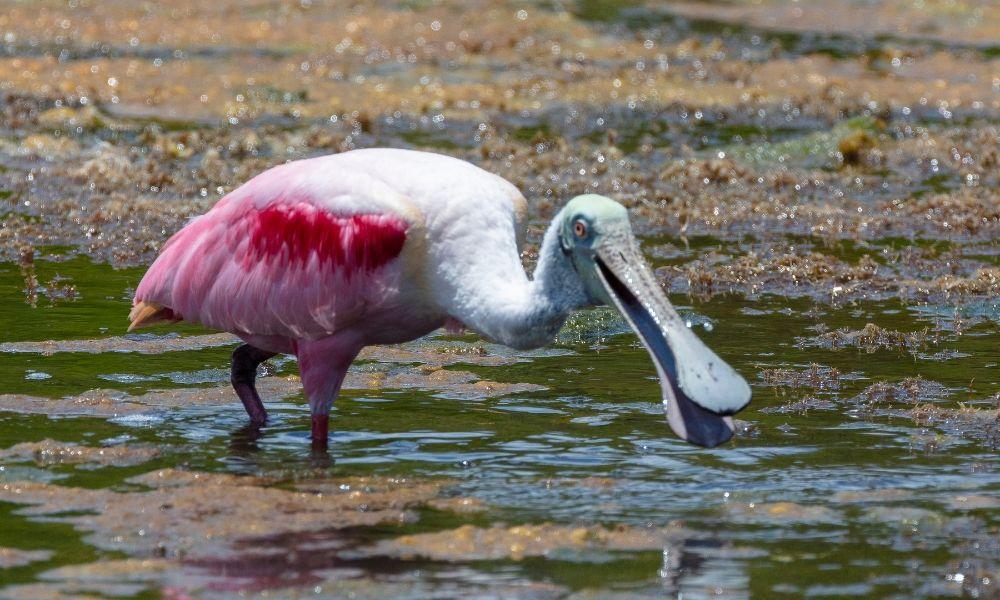
Roseate spoonbills: Yes, they really are that pink. Look for them at Spoonbill Pond and, occasionally, along Egans Creek.
Herons and egrets: These white birds of Florida, plus their gray cousins, work the shallows around Fort Clinch.
Bald eagles and ospreys: Look up, because these Florida birds of prey patrol the skies around Spoonbill Pond.
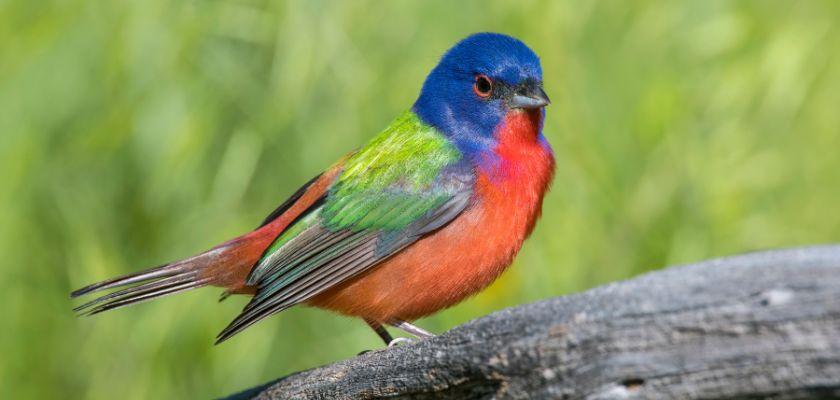
Painted buntings: Spring and summer bring these colorful little show-offs to Big Talbot’s Black Rock Trail.
The Merlin Bird ID app helps you identify Florida birds by photo or song. Download its free Southeast bird pack before you leave, and it works without a cell signal. Keep a running list, too, because checking off your first roseate spoonbill feels pretty great.
Birding Spots with Easy Access
Not every birding morning needs a hike. Egans Creek Greenway and the Nassau Sound catwalk both make for short, easy walks.
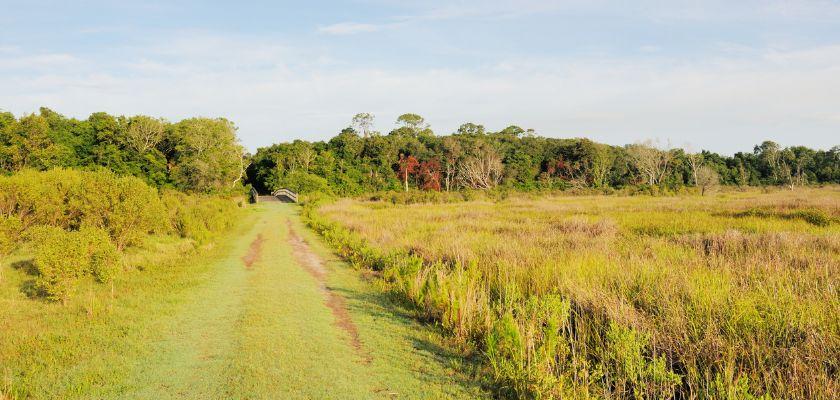
The Egans Creek Greenway spans more than 300 acres with four miles of walking and biking loops. Birders have logged about 200 species there, and it’s open daily from sunrise to sunset.
At the island’s south end, Amelia Island State Park’s catwalk over Nassau Sound overlooks sandbars and bird islands.
What to Pack for a Day of Birding
Birding doesn’t take much gear, and a light bag makes a long morning on the trail easier. Everything on this list fits in a single backpack.
Here’s what to grab before you head out the door:
Binoculars: Bring your own pair, especially for stops beyond Fort Clinch.
Bug spray and sunscreen: Marsh trails mean bugs, so pack both.
Water and snacks: Grab a cooler and a backpack from our beach gear on your way out.
Muted clothing: Earth tones help you blend in, while bright white and neon tend to spook birds. Save the flamingo-pink shirt for dinner.
Layers: November highs average around 71 degrees, but mornings start closer to 59.
Add a pair of sturdy shoes, too, since grassy trails can stay damp after rain. We’ll take care of breakfast, so you’ll start the trail well fed.
Meet Our Favorite Local Birding Guide
A guided walk is the fastest way to learn about the local birds. Our pick is the Birds of Amelia tour at the Amelia Island Nature Center on the grounds of Omni Amelia Island Resort. The Nature Center is a Great Florida Birding Trail site in its own right, and its programs are open to everyone.
Tours run about an hour and include binoculars, and beginners are always welcome. Call ahead, though, because every tour requires pre-registration.
Birders who like company can join the Amelia Island Bird Club’s monthly field trips, September through May. The club charges no dues, and anyone is welcome to tag along.
FAQ: Your Birding Trail Questions, Answered
Every birding trip raises a few practical questions. These are the trail questions we hear most often over breakfast. Save the rest for check-in, and we’ll happily talk birds.
What bird is only found in Florida?
That would be the Florida scrub-jay, the only bird species found exclusively in Florida. It lives in a rare central Florida scrub, so you won’t spot one on Amelia Island.
What is the best time of year to see birds in Florida?
Migrating and wintering birds bring the most variety from fall through spring. On our island, winter fills Spoonbill Pond with waterfowl and pelicans, and spring migration brings warblers and painted buntings.
Are there birding apps that cover the Great Florida Birding Trail near Amelia Island?
Yes. Merlin Bird ID and eBird, both from the Cornell Lab, work at every site near us. The trail’s website also has a Find a Site map with directions to each stop.
Do I need a permit to bird on the Great Florida Birding Trail?
Our local trail sites require no special permit, just each site’s regular entrance fee. Egans Creek Greenway is free, while Fort Clinch and Big Talbot charge small per-vehicle fees.
Your Stop on the Great Florida Birding Trail Starts Here
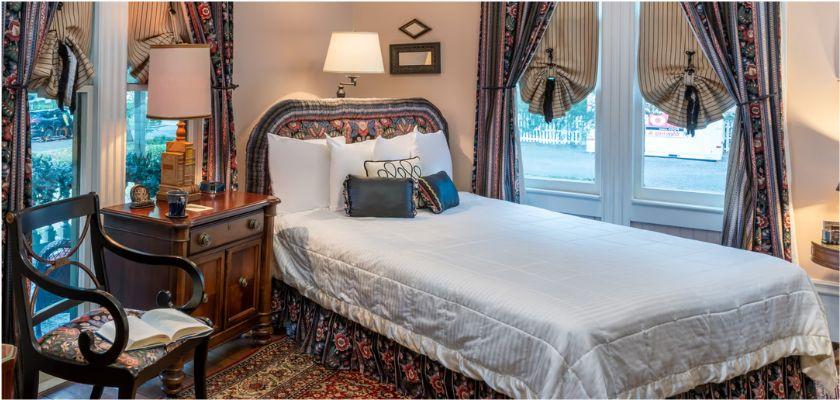
The Great Florida Birding Trail crosses the whole state, but we’re partial to our little corner of it. Prime birding season runs from fall through spring, so now’s the time to plan your trip. Spend your mornings at Fort Clinch and Spoonbill Pond, then come home to social hour at our 1885 Italianate villa.
Book your birding getaway at The Fairbanks House, and we’ll have the bikes and coffee ready.
Photo Credit: © 6381380 from Getty Images via canva.com, © Purdue9394 from Getty Images Signature via canva.com, © David McGowen from Getty Images via canva.com